A hotel deal is not simply the lowest nightly figure on a search page. It is a booking you can actually use, for the stay you need, at a final cost and on terms you are willing to accept. Comparing the same hotel, dates, room and guest details is the starting point; checking taxes, mandatory charges, inclusions and cancellation rules makes the comparison meaningful.
What Counts as a Genuine Hotel Deal
A genuine deal is a like-for-like booking, not an attractive number taken out of context. Before deciding that one option is cheaper, match the hotel, arrival and departure dates, length of stay, room type and number of guests. Then compare what is included and what the booking rules require.
The UK Competition and Markets Authority’s accommodation-booking guidance focuses on transparent pricing and clearly displayed total costs. That is a useful reader standard: a starting price can help you find an option, but it is not enough to judge value until the selected stay’s payable total is clear.
A lower rate can still be the wrong choice if it has different conditions. Breakfast, taxes, VAT, services, payment timing, deposits, cancellation rights and amendment rules can all affect whether two bookings offer the same thing. Equally, an offer is only useful if the room is available for your dates and the conditions suit your plans.
Treat “deal” as a conclusion you reach after matching the booking details, not as a label supplied by a search result. That approach avoids both false savings and a false sense of flexibility.
Compare the Total Price Before Calling It a Saving
AI-generated generic editorial illustration — not a retailer product photo and does not depict the reviewed product or service. Make the like-for-like total-cost test immediately scannable before readers treat a headline rate as a saving.
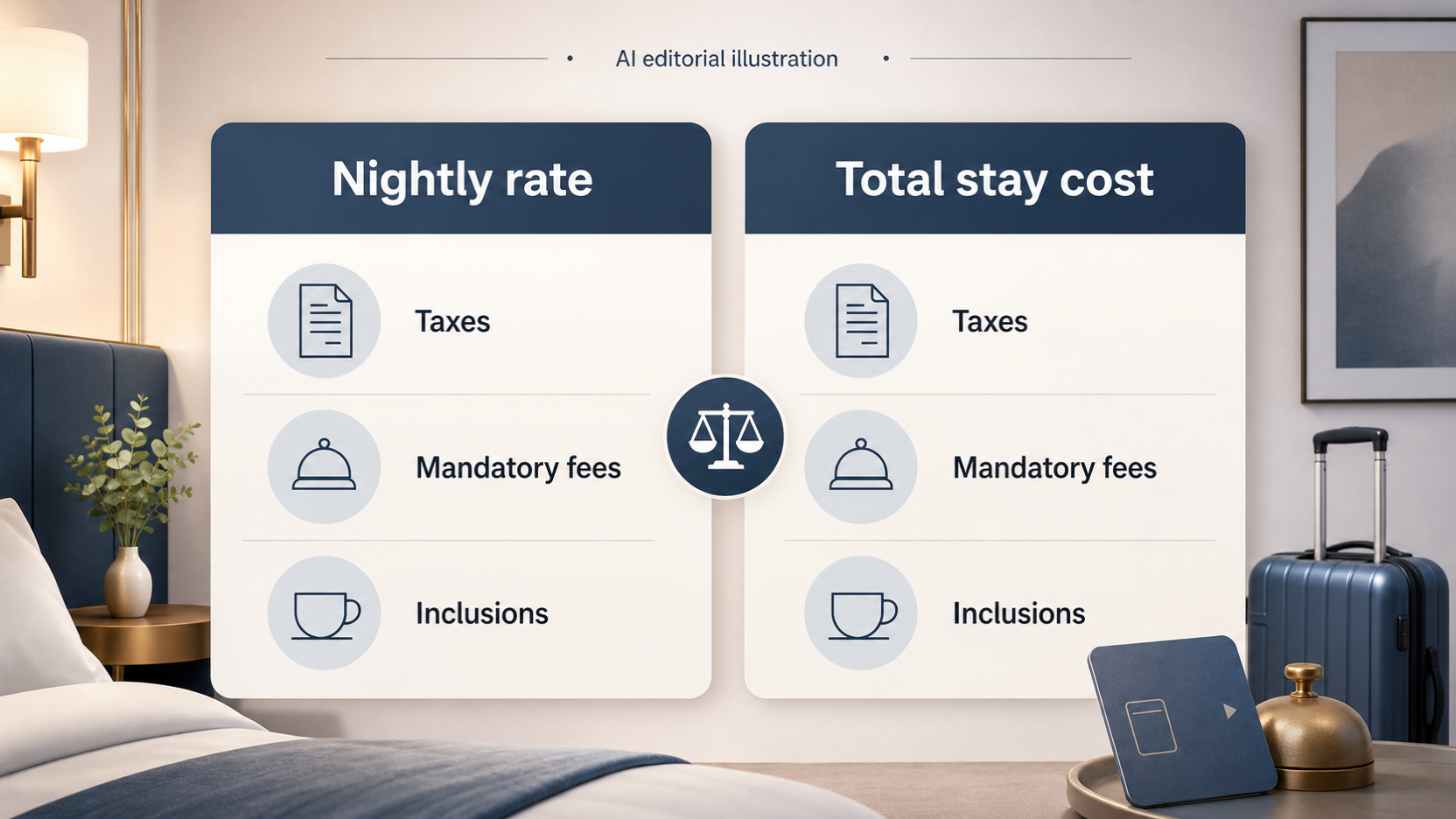
Start with the selected stay rather than the headline nightly rate. Check the number of nights, number of guests and room category, then look for the total amount payable for that exact booking. The CMA guidance says accommodation-booking businesses should be transparent about pricing and clearly display total costs; readers should therefore look beyond a prominent “from” figure.
Make a short comparison list. Include the room price, taxes and VAT where applicable, mandatory service or property charges, and any compulsory items built into the reservation. Then note inclusions that change the real value of the stay, such as breakfast. A booking that appears cheaper before those items are considered may not remain cheaper once the total is calculated on the same basis.
Do not turn optional extras into a mandatory cost comparison unless you intend to buy them with both bookings. The more useful question is whether the quoted total covers everything required for the same hotel stay, rather than whether either website displays the lowest possible starting price.
If the total is not presented clearly, pause before treating the offer as a saving. Select the same room and guest details, proceed far enough to see the payable amount, and record what is included. This also leaves you with a clearer basis for checking any direct-booking price claim later.
Match the Stay and Rate Rules Like for Like
A direct-booking price claim only works when the competing offer is genuinely equivalent. Accor’s Best Price Guarantee terms illustrate the level of matching that can be required: the same hotel, dates, length of stay, rate conditions, room type and number of people. Its terms also specify matching features such as room category, size, beds, view or location where relevant.
Rate conditions are as important as the room. Compare whether each booking is refundable or non-refundable, whether prepayment or a deposit is required, whether breakfast is included, and what the cancellation and change conditions say. A cheaper non-refundable room-only offer is not directly comparable with a flexible room including breakfast.
Check that the other rate is publicly available and can actually be booked. Accor’s terms refer to a lower public price available for booking and calculated on an identical basis as the total cost of the stay, including the same inclusions such as taxes, VAT and services. This is why a screenshot of a lower-looking number alone may not settle the question.
Keep the comparison in the same booking context too. For a claim governed by terms like Accor’s, the type of channel used can matter: website, mobile website and app may need to be compared with the same type of channel. Read the hotel’s own terms before assuming that a different channel or member-only rate qualifies.
Price Cancellation and Payment Flexibility Together
The cheapest available rate is not automatically the best value when your plans could change. Travelodge’s current booking terms describe several booking types, including Flexible Rate, Semi-Flex Rate and Lowest Rate, and direct readers to the terms that apply to their booking. That makes the rate label part of the decision, rather than a detail to leave until after payment.
Before booking, read the cancellation, amendment, refund and no-show provisions shown for the selected rate. Note the payment timing too: an upfront payment, deposit or other payment requirement can change the practical cost of cancelling or changing a trip. The right option depends on how certain your plans are and on the consequences stated in the rate terms.
A flexible rate may cost more at checkout but give you room to alter a reservation under its stated conditions. A lower rate may be suitable when the trip is firm and you accept its restrictions. Neither is inherently better without the context of your journey and the terms displayed for that exact reservation.
Do not rely on a generic description of a hotel brand’s policies. Travelodge says its terms apply to bookings made through its digital channels or telephone booking service, and that the booking type can vary by location and type. Read the conditions before completing the booking, then keep the confirmation and rate details for reference.
Check Direct Booking Claims and Exclusions
AI-generated generic editorial illustration — not a retailer product photo and does not depict the reviewed product or service. Help readers verify whether a competing rate is genuinely equivalent before acting on a price-guarantee or direct-booking claim.
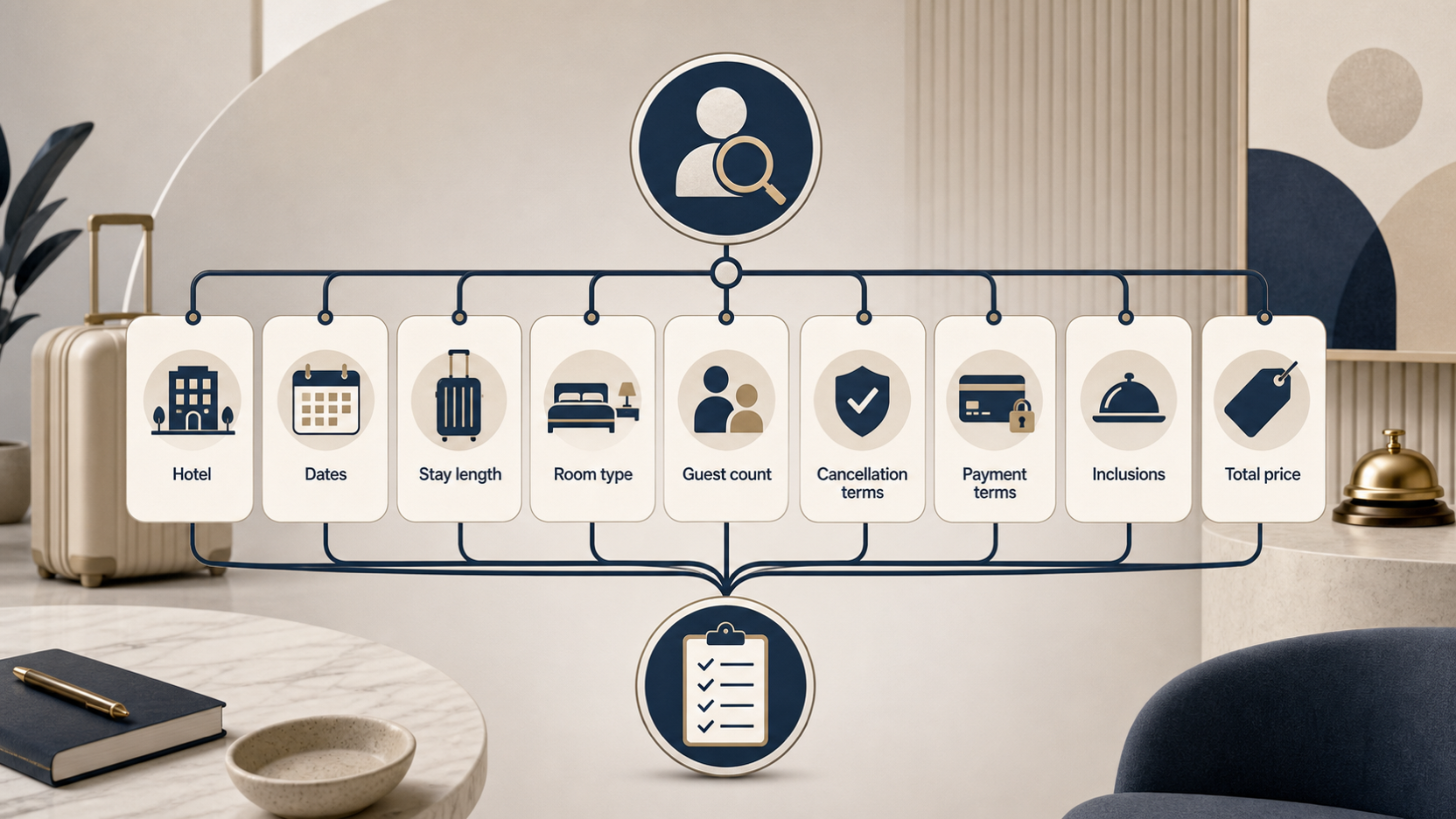
A direct-booking guarantee can be useful, but it is a conditional offer rather than a blanket promise that direct will always be cheapest. Accor’s published terms require a reservation made through an eligible direct Accor channel and a confirmation number. They also set a time limit: the lower rate must be found within 24 hours of confirmation and no later than 48 hours before planned arrival.
The conditions then return to the like-for-like test. The competing rate must be for the same hotel, dates, length of stay, room, occupancy and rate conditions, with the same inclusions and a total calculated on the same basis. A different cancellation policy, a different bed arrangement or a rate that excludes breakfast can make the offers ineligible for comparison.
Eligibility can also depend on the hotel and booking channel. Accor’s terms refer to eligible hotels and require the third-party comparison to use the same channel type as the eligible booking. Check the current terms for the particular hotel and reservation rather than relying on a general summary or a previous claim.
Save the evidence before changing anything: confirmation number, competing rate details, room and guest information, total price, inclusions, booking channel and the time you found the offer. Then follow the hotel’s stated process. If any condition is unclear, do not assume a claim will be accepted.
A Practical Checklist for Booking a Hotel Deal
Use this sequence before you pay:
- Select the same hotel, dates, length of stay, room type and guest count on every option.
- Compare the final payable total, including taxes, VAT, mandatory charges and the inclusions attached to the rate.
- Read the selected rate’s cancellation, change, payment and no-show conditions.
- Check whether the competing room is publicly available to book and whether its conditions are genuinely equivalent.
- If considering a direct-booking claim, read the applicable guarantee terms for timing, eligible hotels, channel requirements and required evidence.
- Keep the confirmation and comparison details until the booking and any claim are resolved.
This method keeps price, usability and flexibility in the same decision. It is especially helpful where one rate looks lower but comes with different inclusions or restrictions.
Frequently Asked Questions
Is the cheapest nightly rate always the best hotel deal?
No. A headline nightly rate may not show the final payable total for your chosen stay. Compare the same hotel, room, dates and guests, then include taxes, mandatory costs and the rate’s inclusions. Also consider whether the cancellation and payment conditions suit your plans.
What needs to match for a direct-booking price guarantee?
The applicable terms control the answer. Accor’s Best Price Guarantee, for example, requires the same hotel, dates, length of stay, rate conditions, room type and number of guests, plus matching total-cost calculation and inclusions. It also has channel and timing conditions, so read the current terms before relying on a claim.
Should I choose a flexible rate or a non-refundable rate?
Choose based on the price and the stated consequences if your plans change. Travelodge identifies different rate types and directs guests to the terms for the booking. A lower non-refundable rate may suit a firm trip; a flexible rate may be more useful if you need the option to amend or cancel under its conditions.
When should I check a hotel booking's terms and conditions?
Check them before completing the reservation and again in the confirmation. Focus on payment, deposits, cancellation, amendments, refunds, no-shows, inclusions and any direct-booking guarantee conditions. Keep the booking and competing-rate details if you may need to query a price claim.
Sources
Related reading
- ibis review: room proposition, direct-booking benefits and practical limits
- How to choose a UK hotel chain: location, room needs, rate terms and extras
- Hotel room and rate types explained: compare flexibility, extras and total stay value
- When to book UK hotels for better value without sacrificing rate flexibility
Editorial information: About our editorial team · Read our editorial policy · Read our affiliate disclosure.