Choosing a UK hotel chain is less about finding a single “best” name and more about matching one specific, bookable stay to your trip. A city-centre overnight for an early train, a family weekend near an attraction and a multi-night work trip can call for very different locations, room setups and booking flexibility.
Start with the essentials that are hard to fix later: where you need to be, who is travelling, how the room will be used and how much flexibility the plan requires. Then compare the actual property and rate shown for your dates. This keeps the decision practical and avoids treating a chain-wide impression as a substitute for the details of a particular booking.
Start with the trip and location
Set the trip’s non-negotiables before opening several booking tabs. Write down the place you need to reach, the relevant arrival and departure times, the number of guests, and any mobility, work or family requirements. For a leisure break, this might mean being within easy reach of an attraction or parking. For work travel, it may mean a predictable route to an office, station or meeting venue.
Use location as a first filter, not a final answer. A hotel that looks close on a map may still be inconvenient if the route, arrival time or local transport does not suit your schedule. Conversely, a slightly less central property may work better if it makes parking, check-in or the next morning’s journey simpler. Check the property page for the details that matter to your trip instead of assuming that every hotel in a chain has the same setting or facilities.
Next, separate “nice to have” features from deal-breakers. A lower headline rate is not useful if the selected hotel cannot support the group, arrival plan or access requirements. This is also the point to decide whether the booking needs to remain changeable. Once those priorities are clear, you can shortlist properties and compare their rooms and rates on a like-for-like basis.
When you compare online options, look for a clear total price rather than relying only on an initial nightly figure. UK competition guidance for online accommodation booking businesses emphasises transparent pricing information and clear display of total costs. That makes the final booking screen an important part of the comparison, rather than a formality after you have chosen a hotel.
Match the room to your group and stay
A room category name is only a starting point. Check the selected room’s stated occupancy, bed arrangement and any practical features that matter to your group. Two adults travelling for one night may simply need a suitable sleeping arrangement; a longer stay may make floor space, luggage storage and a place to work more important. A family should confirm that the listed configuration works for every traveller, rather than assuming a room described as suitable for a group will meet a particular sleeping plan.
Keep the room decision at property and date level. Room types can vary between hotels, and the same chain can present different options according to location, demand and the guests entered in the search. Add every traveller, including children, before judging whether an option is appropriate. If the booking journey gives an occupancy limit or room description, treat that as the operative information for that stay.
For a business trip, consider the whole routine: when you will arrive, whether you need to prepare for a meeting, and whether sharing a room is acceptable under your organisation’s travel policy. For leisure, think through luggage, cots or other equipment, and whether a late return or early departure changes what is useful. These are not luxury comparisons; they are checks that prevent an otherwise good location and rate from becoming a poor fit.
If the website does not answer a material question, ask the hotel before committing. This is especially useful where room layout, accessible features or a particular practical need affects whether the stay can work. Save the answer alongside the room description and rate conditions so that your choice remains tied to the booking you are considering.
Check the rate terms before you book
AI-generated generic editorial illustration — not a retailer product photo and does not depict the reviewed product or service. Support a practical comparison of rate conditions and total cost before booking.
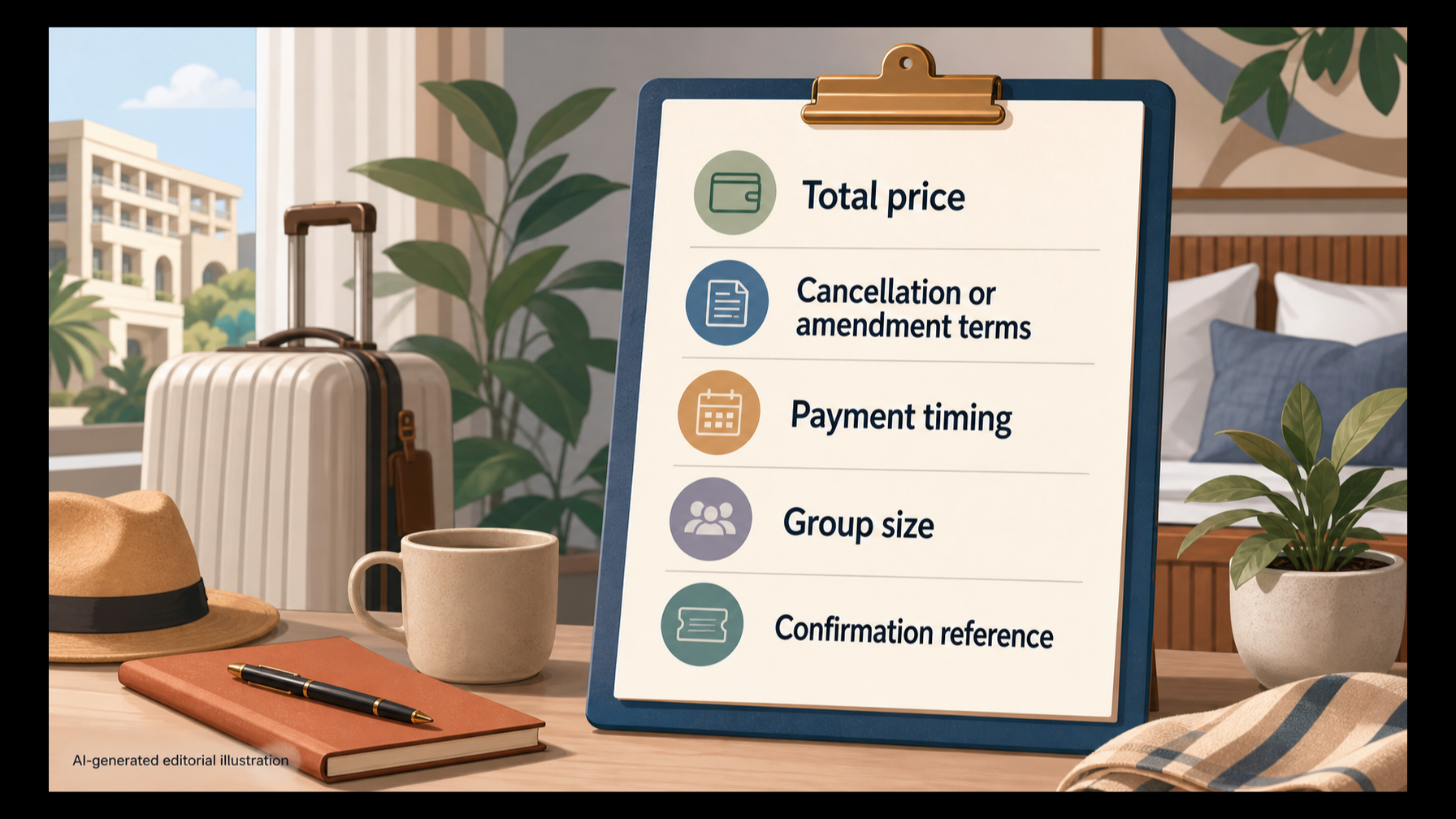 Compare the rate conditions alongside the price. The rate that costs least today may have different change, cancellation, payment or refund conditions from another option at the same hotel. Review the terms shown for your exact booking, including the date, property, room and booking channel, before selecting it.
Travelodge’s booking terms illustrate why this matters: its terms say that the labels and conditions can depend on booking location and type, and refer to Flexible Rate, Semi-Flex Rate, Lowest Rate, Group Booking and Extras. The terms also cover payment, cancellation, amendments, refunds and no-shows. That does not mean every traveller will see every option, but it does show why a generic description such as “flexible” should not replace reading the terms attached to the rate in front of you.
Check five things before completing payment:
- The total payable amount for the stay, including any clearly presented compulsory costs.
- What must be paid now and what the selected rate says about payment timing.
- Whether the rate can be changed or cancelled, the deadline for doing so and any stated consequence of missing it.
- Whether the booking is for one room or a larger party, since group conditions may differ.
- What confirmation reference or record you will receive after purchase.
The Competition and Markets Authority’s guidance says online accommodation booking businesses should be transparent when displaying pricing information and clearly display total costs. Use that principle as a reader’s check: make sure the amount you are prepared to pay is the amount presented at the point of booking, and pause if an item or condition is unclear.
Read the conditions before clicking acceptance. Travelodge states that customers using its digital channels are asked to accept its terms before completing a booking, and advises readers to read them carefully. Other booking journeys may be structured differently, but the practical habit remains sound: keep a copy or screenshot of the rate conditions and confirmation details that applied when you booked.
Verify accessibility and useful extras
Accessibility, arrival arrangements and extras should be verified with the chosen hotel, not inferred from a chain name or a search result. Begin with the needs that affect whether the stay is viable: step-free access, an appropriate room setup, assistance requirements, arrival timing or any other support that cannot be left to chance. Check the property’s current information and contact it where a listed description does not resolve the question.
Treat extras in the same way. Parking, food options, pets, selected-room choices and other add-ons can be relevant, but availability and conditions may depend on the property, travel date and chosen rate. Travelodge’s terms identify Extras and Choose your room among the matters covered by its booking terms, alongside arrival, departure and guest requirements. Use this as a reminder to read the terms that apply to an extra before relying on it.
Make a short written list of the answers you need: whether the feature is available for your dates, whether it must be reserved, whether there is an additional charge, and whether a condition applies on arrival. If a hotel confirms something important directly, retain that record with the booking confirmation. It is more useful than relying on a general expectation about what a hotel chain usually provides.
Use a final pre-booking checklist
Once you have a shortlist, rank it in an order that reflects the trip rather than the marketing. First, eliminate any option that fails the location, room or essential-access check. Then compare the remaining bookable rates using the same dates, guest details and room basis. This sequence prevents a cheap-looking option from winning before you have established that it can meet the core need.
Before confirming, check:
- Is the hotel in a workable location for the real arrival, departure and daily journey?
- Does the selected room meet the stated occupancy and the group’s practical needs?
- Is the displayed total cost acceptable, and have you read the attached terms?
- Are cancellation, amendment and payment conditions suitable for the certainty of your plans?
- Have accessibility needs and important extras been checked with the specific property where necessary?
- Will you receive a booking reference and confirmation record that you can keep?
Premier Inn says customers can make bookings up to 12 months in advance, and that a booking reference is provided and included in the confirmation email. It also says the reference can be used to view the booking through its Manage Booking service. Your selected chain or channel may use a different process, so rely on the confirmation and terms supplied for your booking—but retain the reference and the email or other confirmation record once the purchase is complete.
A confident choice is one you can explain in a sentence: this property works for the journey, this room works for the people travelling, and these current terms work for the level of flexibility you need.
Frequently Asked Questions
How far ahead should I book a UK hotel?
Book when your dates, location and room requirements are sufficiently clear to compare real rates and terms. The right lead time depends on the trip and on what is currently bookable. As one documented example, Premier Inn says bookings can be made up to 12 months in advance. Check the selected hotel’s current availability and terms rather than assuming every chain follows the same window.
What should I check before accepting a hotel rate?
Check the final total cost, room and occupancy details, payment timing, cancellation or amendment conditions, and any terms for extras you intend to use. Read the conditions attached to the exact rate rather than comparing only the headline price. Online accommodation booking guidance also highlights the importance of transparent pricing and clear total costs.
How do I know whether a hotel booking is confirmed?
Look for the confirmation record provided by the hotel or booking channel and retain it. Premier Inn says it gives customers a booking reference and includes that reference in its confirmation email; it says the reference can be used to view the booking. If your chosen provider gives a different confirmation method, follow its stated process and keep the relevant reference, email or record.
Should I book directly with the hotel chain or through another booking site?
Compare the actual property, room, total price and terms available through each channel at the time you are ready to book. The useful question is not which route is always best, but whether the rate conditions, confirmation process and support arrangements meet your trip’s needs. Read the terms before accepting them and keep the confirmation details from the channel you choose.
Sources
Related reading
- Best UK hotel chains for city breaks: evidence-led choices by room, booking flexibility and extras
- Premier Inn vs Travelodge: rooms, rates, booking flexibility and extras compared
- Hotel room and rate types explained: compare flexibility, extras and total stay value
- How to identify genuine hotel deals: total price, rate rules and direct-booking claims
Editorial information: About our editorial team · Read our editorial policy · Read our affiliate disclosure.